
The Bible
Lessons from Scripture
Lessons from Scripture ↴
Quick Links
Have a Question?
Lessons from Scripture
7 of 7 Pages
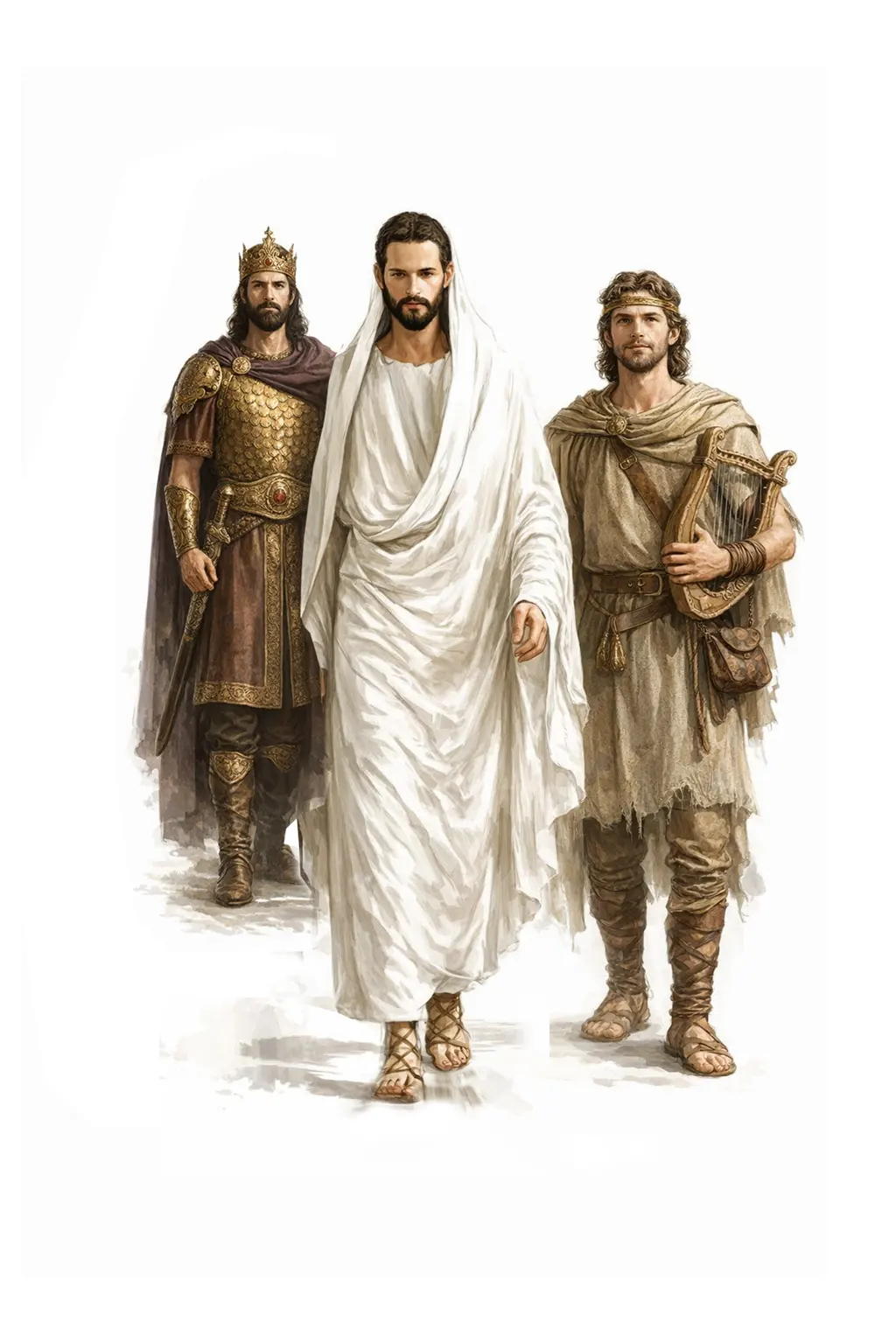
Two Kings, One Heart: Strength in Weakness
Choosing God’s Heart Over Human Strength
In the books of 1 and 2 Samuel, we encounter two kings: Saul and David. Both ruled under God’s authority, yet only one was truly a man after God’s own heart. By examining the lives of these two men, we gain valuable insight into their relationship with God and the lessons it holds for us today.
King Saul
At one point, God’s chosen people asked for a king. Their request reflected a rejection of God’s authority, yet He allowed it and appointed Saul as their king. God did not choose Saul because he was an ideal ruler; rather, He gave the people what they had asked for and deserved.
Initially, Saul appeared successful—a humble, physically impressive military leader who united the tribes of Israel. Yet God warned that Saul would ultimately become a tyrant, exactly what the people wanted at the time.
Saul’s disobedience became apparent early in his reign. On one occasion, he grew impatient with Samuel, who was to offer sacrifices to God before battle, and took it upon himself to perform the ritual. Later, God commanded Saul to utterly destroy the Amalekites and all their possessions, leaving nothing behind. Yet Saul disobeyed, sparing some of the spoils and directly defying God’s instructions. As a result, he lost God’s favor and found himself estranged from Him.
King David
After Saul came David, God’s chosen king. The youngest and smallest of his brothers, David was an unlikely choice in the eyes of men, but God saw his heart. He courageously faced Goliath when Saul and his army could not, demonstrating his faith and reliance on God.
Yet, despite his many triumphs, David was far from perfect. He committed serious sins, including an affair with his friend’s wife, which led to her pregnancy, and he orchestrated the death of Uriah to cover it up. David also struggled with moments of cowardice, unforgiveness, and failure as a father. Yet, David was the one called a man after God’s own heart.
At first glance, David might seem weaker than Saul, and his sins—murder, adultery, and neglect of God’s calling—appear far greater. So why does the Bible describe him as a man after God’s own heart? Why did God choose David, while Saul was rejected?
The difference between Saul and David lies not in their mistakes, but in their hearts. Saul consistently failed to obey God and remained unrepentant. When Samuel confronted him about offering sacrifices on his own, Saul did not admit his wrongdoing; instead, he blamed Samuel and acted out of fear. Later, when he spared possessions from the Amalekites, he shifted the blame to the people. In 1 Samuel 15, Saul tells Samuel that the soldiers kept the best plunder to sacrifice to “the LORD your God,” trying to justify his partial disobedience. His words reveal that Saul’s heart was not truly with God.
David, despite his serious sins, remained repentant, sought God’s guidance, and humbled himself before Him. When he recognized his wrongdoing, he was deeply contrite, fully aware that he had sinned against the God he loved. In 2 Samuel 12:13, David confesses to the prophet Nathan, saying, I have sinned against the LORD.
In response, God extends His forgiveness through Nathan: The LORD has taken away your sin.
This passage shows David’s willingness to take responsibility and the power of genuine repentance.
A Man After God’s Heart
David was not chosen because he was strong, but because his heart was aligned with God. God knew that David would rely on Him, trusting not in his own strength, but in the strength that comes from above. David understood his need for God in every part of life. And even when he fell, God knew his heart—that he would feel conviction, return in humility, and seek Him again. Through this, God received the glory, as it should be.
If God had chosen a man who believed he was strong in himself—one who felt no need for God—that man would have taken the glory for himself. Like Saul, he would have justified his actions, made excuses, and refused to humble himself before God. This reflects the same pride that led to Satan’s fall.
“And He said to me, ‘My grace is sufficient for you, for My strength is made perfect in weakness.’ Therefore most gladly I will rather boast in my weaknesses, that the power of Christ may rest upon me.” (2 Corinthians 12:9)
The greatest moments in ministry have come when I have remembered my own weakness. In those times, I depended fully on God, and He did what only He could do. Glory belongs to Him. But when I began to rely on myself, thinking I could do it in my own strength, things did not go well.
God is looking for those who are willing to admit their weakness—those who are poor in spirit, humble, and contrite. These are the ones He uses, so that the world may see His power at work through them and recognize that it is God who sustains us all.
When we understand that it is God working through us—producing life and bearing fruit—we give Him all the glory, as it should be. Like a branch abiding in the vine, our lives become living testimonies of His goodness, revealing to the world that God is truly good.