
Christianity
The Door to Salvation
The Door to Salvation ↴
Quick Links
Have a Question?
The Door to Salvation
4 of 4 Pages
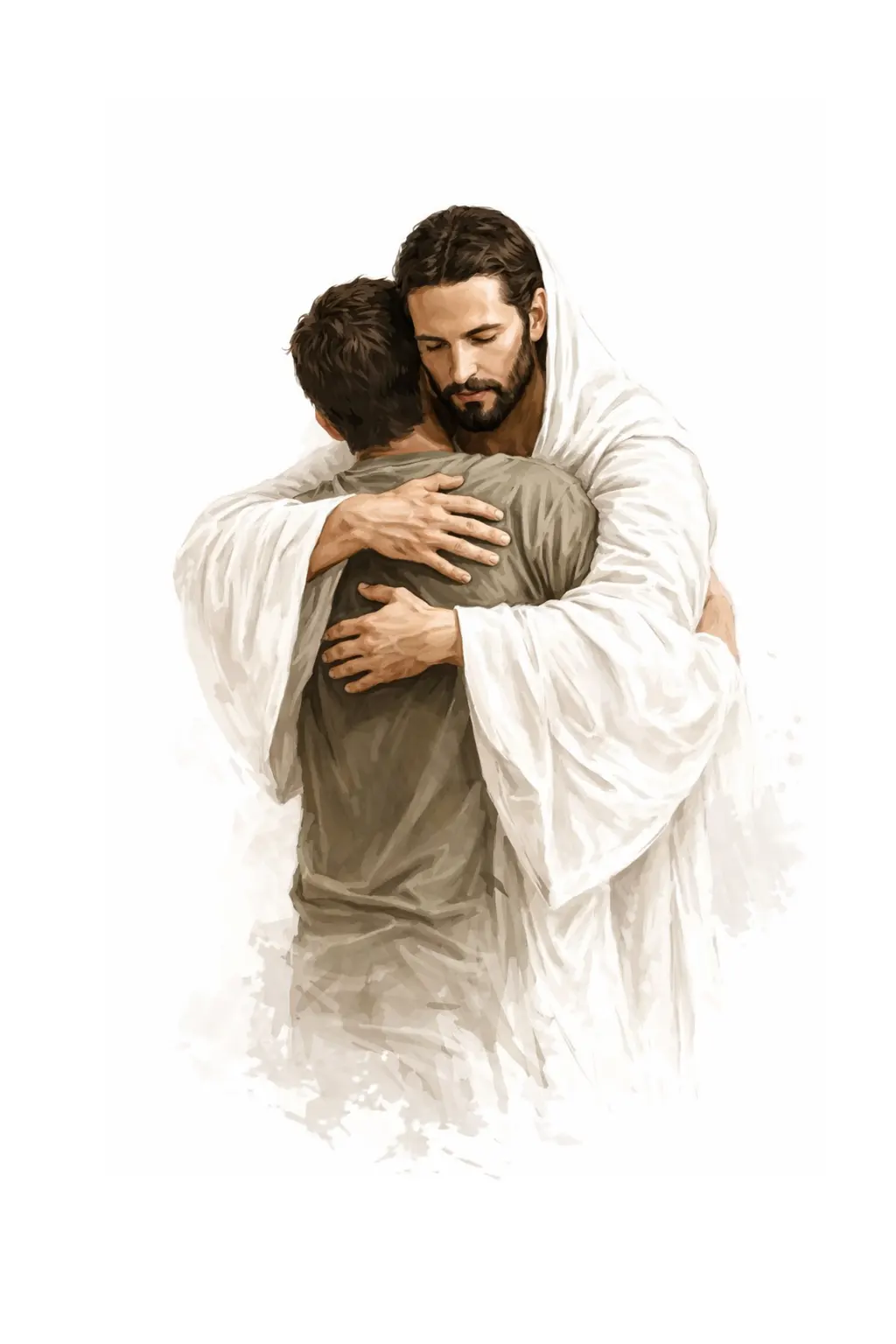
True Salvation
What True Salvation Really Means in Christ
What is salvation? For many in the modern church, the word has been softened, reshaped, and sometimes even misunderstood. Too often, salvation is presented as a ticket to a better life here and now—an answer to our problems, a pathway to financial blessing, a way to heal broken relationships or achieve success. But is that what Scripture truly teaches? Is salvation really about making life easier, or is it about something far greater, something eternal?
I have heard countless testimonies in and around the church, and I often notice a concerning pattern that makes me wonder if they unintentionally distort the true meaning of salvation. While I rejoice whenever someone genuinely comes to faith, many testimonies seem to follow the same script: I was broken, Jesus found me, and now my life is better—my marriage was healed, my finances improved, I received a promotion at work.
Though well-meaning, these stories risk presenting a false picture of salvation. They tend to emphasize personal benefits and life improvements rather than the core truth—that salvation is about Christ Himself: His work, His grace, His glory. It is not about our circumstances becoming easier.
Paul the Apostle encountered Jesus on the road to Damascus and experienced true salvation. Yet, as he recounts his testimony throughout the New Testament, his story stands in stark contrast to many of the testimonies we hear today. Paul could certainly say he was lost and that Christ found him, but his life did not suddenly become easier—it became immeasurably harder. He was beaten, imprisoned, stoned, persecuted, and endured great suffering for the sake of Christ.
And yet, Paul declared: “For I know that this will turn out for my deliverance through your prayer and the supply of the Spirit of Jesus Christ” (Philippians 1:19).
The word deliverance can also be translated salvation. Paul rejoiced in his suffering, not because it made life comfortable, but because he knew that even his trials were working toward the fullness of his salvation in Christ.
True salvation is not about finding a better life here—it is about receiving Jesus Himself. He is our better life, eternally. Salvation means leaving behind this world and its empty promises, and inheriting the gift of Christ and His kingdom. It is turning away from the lies and vanity of this life and discovering something greater to live, fight, and even die for. True salvation means finding Someone worthy of all glory—so worthy, that we willingly put our old selves to death.
What makes a good soldier? He has found a cause worth fighting for and is willing to leave his old life behind in full devotion to that mission. A soldier who refuses to let go of the past will soon find himself unprepared and vulnerable in the very battle he fights.
What makes a good marriage? It is when each spouse is willing to leave behind their single life, to die to self, and to live for one another in a covenant of love until death parts them. Marriages falter when individuals cling to their independence, hold on to self-interest, and refuse to let their former life die.
So it is with salvation. True salvation means putting an end to the old self, turning from this world, and surrendering our lives fully to Jesus for a new life in God’s kingdom. Yet, on this side of heaven, our flesh still wages war within us. It clings to this present life with a death grip, craving comfort, wealth, success, recognition, and glory—because it believes the lies of Satan and the system of this world.
This is why the flesh must be put to death. Left alive, it will rob us of the eternal riches found only in Christ and trap us in a meaningless pursuit of earthly gain, leaving our witness compromised and our hands stained with blood. Such a life calls into question whether we ever truly experienced salvation at all.
Disqualified?
So the real question is not what we must do to receive or keep the free gift—it is whether we have truly received it at all.
God’s offer is not something to treat lightly. It is not a small matter; it calls for full consideration of what it means to follow Christ.
We are invited to count the cost—not in the sense of paying for salvation, but in surrendering everything to Him. This means turning away from self-rule, our own ideas of righteousness, and our attempts to be our own gods, and yielding fully to Him.
There is a difference between mere acknowledgment of God and true faith in Him. True faith carries a deep inward reality—a drawing toward Christ, like the pull of love that reorients the heart.
This does not mean the struggle disappears. There are still voices that try to convince us we must earn God’s love, prove ourselves, or maintain our standing through effort. Our flesh often agrees with that lie.
That is why Scripture calls us to deny the flesh and walk in the Spirit. To listen to that voice is to drift away from the simplicity of the gospel.
This is why Paul speaks so strongly to the believers in Galatians, rebuking them for turning back to a system of works after beginning in grace.
“Having begun by the Spirit, are you now being perfected by the flesh?” — Galatians 3:3
To believe that we must add something to our salvation—whether to earn it or to keep it—is, in effect, to say that Christ’s work was not enough. It is to doubt that God can complete what He begins. It introduces human boasting where only grace should stand, and it sets aside God’s promise in favor of human effort.
The Final Question
The gospel is not an invitation to help Jesus save you—it is an invitation to surrender to the One who already has.
Salvation is not Christ plus your effort; it is Christ alone.
The cross was enough. His blood was enough. His grace is enough.
The question is not whether His gift is sufficient, but whether you are willing to stop trusting yourself long enough to receive it.
Because the gift is free—but it will cost you your pride.
It will require you to let go of self-rule, self-righteousness, and the illusion that you can save yourself.
But what you receive is far greater: forgiveness, life, peace, purpose, and Christ Himself.
The gift is unconditional.
The gift is eternal.
The gift is Jesus.
True salvation means the old life is over—we have seen the light, and the light of Christ has opened our eyes. We are done with ourselves, with this world, with its foolishness, lies, and pride. Now we live to give all glory to God. If we suffer for our faith, so be it—for we possess riches that no trial can take away, not even the temporary afflictions we endure on this side of heaven. Every hardship becomes part of our salvation story, a testimony for others, and above all, for the glory of our Savior, Jesus Christ, who suffered the same for us.
This is true salvation in Him.
True salvation costs us everything, but it gives us Christ—and He is worth infinitely more than anything this world offers. Let us take up our cross, die to ourselves, and live for the glory of Jesus, knowing that in Him we already possess eternal riches that cannot be lost.
This is the salvation that transforms, sustains, and glorifies God. Anything less is not salvation at all.